Showing posts with label Market Update. Show all posts

ILHM LUXURY HOUSING WEEKLY REPORT : DETROIT

HOW'S THE MARKET?

That's the question this report answers for the "luxury market" nationwide, and for the luxury markets in more than 30 major metro areas.

The ILHM Luxury Market Report is a snapshot of the national luxury market.  Like the Case-Shiller Composite Index and other national indices, it is a bundle of data from markets around the country that give a simplified view and try to get at the question of what's happening in the marketplace.


ILHM LUXURY HOUSING REPORT DETAIL: DETROIT 

The charts below show the 7-day and 90-day rolling averages for list price, days on market, and inventory for the metro area's luxury market (e.g. top 10 zips with median prices above $500k)


ILHM-DETROIT VS NATIONAL

The charts below compare the ilhm-detroit luxury market with the ILHM National Luxury Market Index and show 90-day rolling averages for Median List Price and Days on Market.
The chart below shows the Altos Market Action Index for the metro area's luxury market and the National Index.

New Home Sales Up 12.7% From Last Year


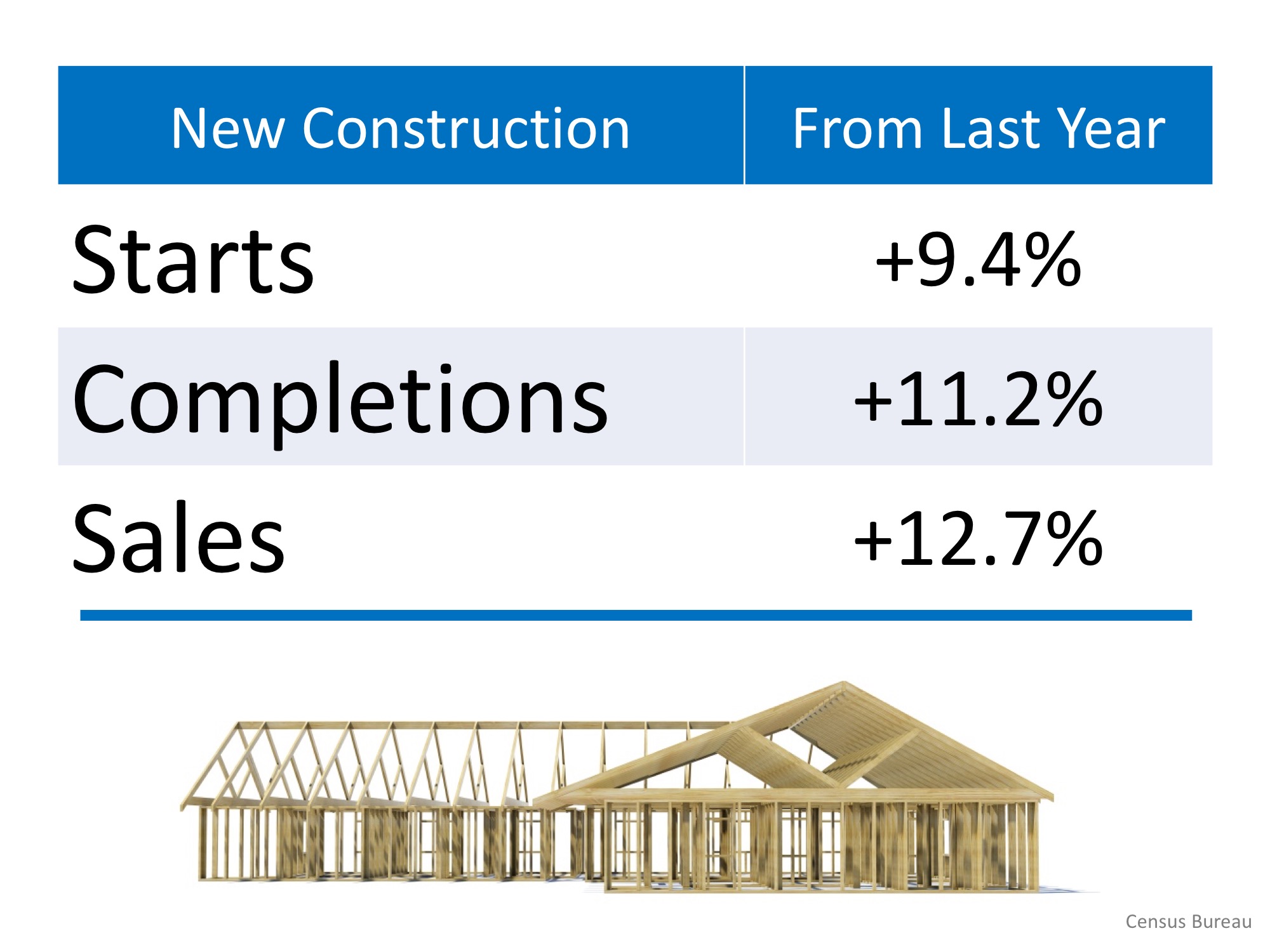
According to the latest New Residential Sales Report from the Census Bureau, new construction sales in August were up 3.5% from July and 12.7% from last year! This marks the second consecutive month with double-digit year-over-year growth (12.8% in July).
The report also showed that builders have ramped up construction with an increase in new construction starts and completions. The summer months are often a busy time for builders as they capitalize on the warmer weather to be able to finish projects.
Below is a table showing the change in starts, completions, and sales from last August.
New Home Sales Up 12.7% From Last Year | MyKCM
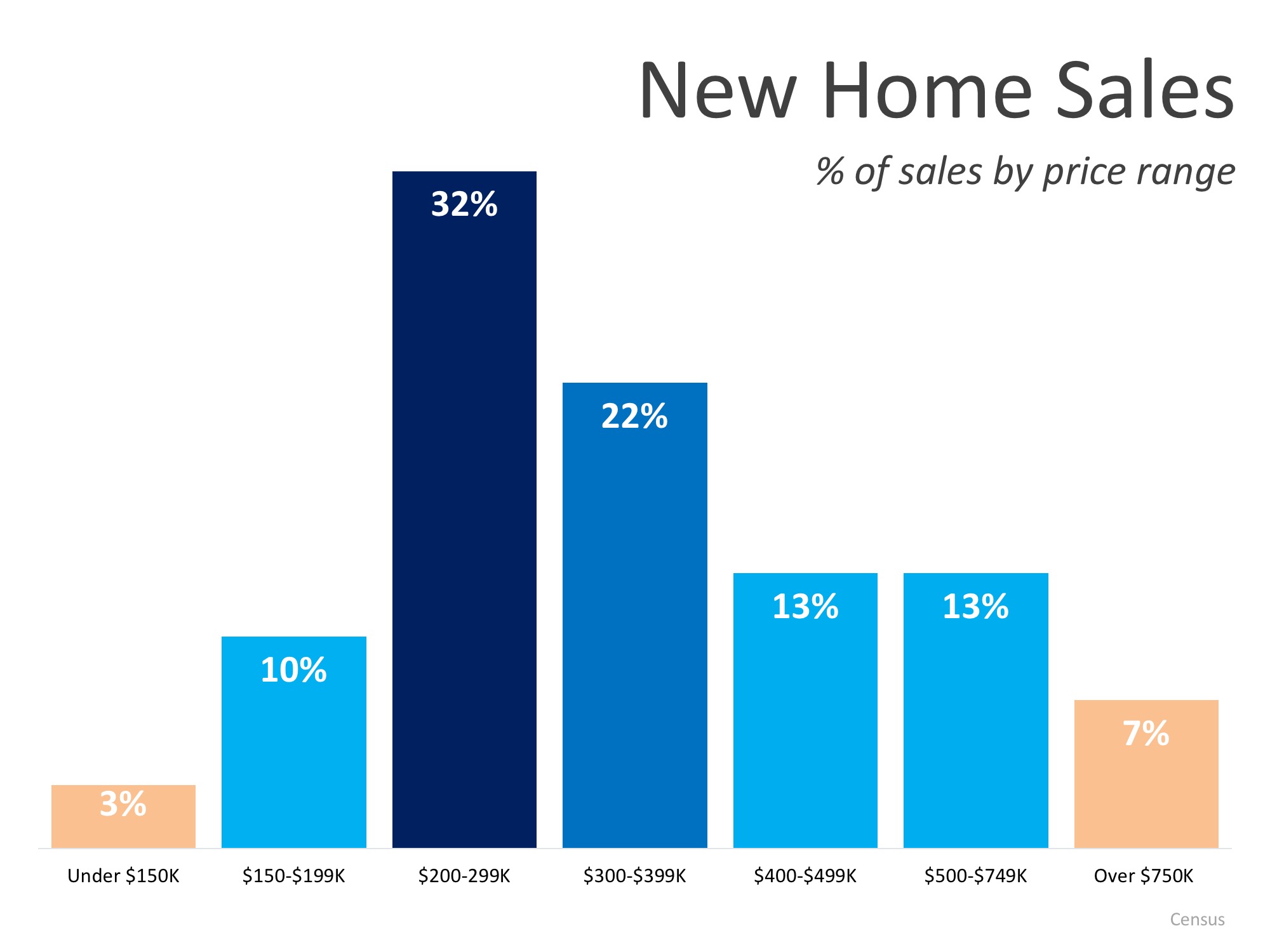
Other notable news from the report is that the percentage of new construction sales in the $200-$299k range has continued to break away from the $300-$399k range.
This shows that builders are starting to build lower-priced homes that will help alleviate some of the inventory challenges in the starter and trade-up home categories. The chart below shows the full breakdown.
New Home Sales Up 12.7% From Last Year | MyKCM

What does this mean for buyers and sellers?

If you are thinking of buying or selling in today’s market, you no doubt have heard that there is a shortage of existing homes for sale which has been driving home prices up across the country. The additional new construction coming to the market could help alleviate this shortage, but we are still not back up to pre-crisis levels.

Buying a Home is Cheaper than Renting in 38 States! [INFOGRAPHIC]


Some Highlights:

  • According to a study by GOBankingRates, it is cheaper to buy a home than rent in 38 states across the country.
  • In six states the difference between buying & renting would account for less than a $50 monthly difference, leaving the choice up to the individual family.
  • Nationwide, it is now 26.3% cheaper to buy.

.Are We About to Enter a Buyers’ Market?


Home sales are below last year’s levels, home values are appreciating at a slower pace, and there are reports showing purchasing demand softening. This has some thinking we may be entering a buyers’ market after sellers have had the upper hand for the past several years. Is this really happening?
The market has definitely softened. However, according to two chief economists in the industry, we are a long way from a market that totally favors the purchaser:

Dr. Svenja Gudell, Zillow Chief Economist:

“These seller challenges don’t indicate we’re suddenly in a buyers’ market – we don’t expect market conditions to shift decidedly in favor of buyers until 2020 or later. But buyers certainly are starting to balk at the rapid rise in prices and home values are starting to grow at a less frenetic pace.”

Danielle Hale, Chief Economist of realtor.com:

“The signs are pointing to a market that’s shifting toward buyers. But, in most places, we’re still a long way from a full reversal.”
In addition, Pulsenomics Inc. recently surveyed over one hundred economists, real estate experts, and investment & market strategists and asked this question:
“When do you expect U.S. housing market conditions to shift decidedly in favor of homebuyers?”
Only 5% said the market has already shifted. Here are the rest of the survey results:

Bottom Line

The market is beginning to normalize but that doesn’t mean we will quickly shift to a market favoring the buyer. We believe Ivy Zelman, author of the well-respected ‘Z’ Report, best explained the current confusion:
“With the rate of home price appreciation starting to decelerate alongside the uptick in inventory…we expect significant debate about whether this is a bullish or bearish sign.
In our view, the short-term narrative will probably be confusing, but more sustainable growth and affordability will likely be the end result."

Mortgage Interest Rates are Still Going Up… Should You Wait to Buy?


Mortgage interest rates, as reported by Freddie Mac, have increased by close to a quarter of a percent over the last several weeks. Freddie Mac, Fannie Mae, the Mortgage Bankers Association, and the National Association of Realtors are all calling for mortgage rates to rise another quarter of a percent by next year.
In addition to the predictions from the four major reporting agencies mentioned above, the Federal Open Market Committee recently voted “unanimously to approve a 1/4 percentage point increase in the primary credit rate to 2.75 percent.” Historically, an increase in the primary credit rate has translated to an overall jump in mortgage interest rates as well.
This has caused some purchasers to lament the fact that they may no longer be able to get a rate below 4%. However, we must realize that current rates are still at historic lows.
Here is a chart showing the average mortgage interest rate over the last several decades:

Bottom Line

Though you may have missed the lowest mortgage rate ever offered, you can still get a better interest rate than your older brother or sister did ten years ago, a lower rate than your parents did twenty years ago, and a better rate than your grandparents did forty years ago.
A fresh new listing and 2 more exciting properties OPEN this weekend.


OPEN HOUSE
📣 4021 COMMERCE Road, Orchard Lake 48324 with Chris on Saturday 3 PM to 5 PM and Sunday 12 PM to 2 PM

http://tours.mixedmediaco.com/83581/4021-commerce-rd-west-bloomfield-township-mi-48324
218010679
Seller will entertain offers between $2,000,000 - $2,350,000. The pictures are good but you need to see this house to experience it. Overlooking the most sought after lake in Michigan, is this Aspen inspired gem. Breathtaking views of the lake from every room, the entire back of the house is glass. Spectacular unconventional design, two grand staircases with wood/iron detailing, and an elevator that goes to all 3 levels. Soaring 2 story Great Room with detailed moldings, floor to ceiling windows. Barrel roof and wood trim detailing in family room and spacious library with gorgeous Brazilian hardwood floors and 3 walls of bay windows. Amazing kitchen with Cherry LaFata cabinets, enormous granite island with second sink, SS top-of-the-line appliances including Thermador 8 burner oven/stove. Grand master suite with his/hers closets, huge bath with euro shower, separate jetted tub, his/hers vanities with space left over for a couch! Two other En-suites with walk-in closets

OPEN HOUSE
📣 3007 N. Vermont with Leslie on Saturday 1 PM to 3 PM and Sunday 3 PM to 5 PM

http://nexthomecityrealty.com/listings/0,130184/3007-North-Vermont-Avenue-Royal-Oak-MI-48073/
218075412
Immaculate Royal Oak brick bungalow in popular Red Run Heights neighborhood just blocks away from Red Run Golf Club and Red Run Park. This move-in ready 3 bedrooms home has 2 full baths, all beautifully updated in 2015. Kitchen offers granite counter tops, stainless steel appliances and ceramic floors. Beautiful hardwood floors on main level with a spacious family room that includes a gas fireplace and tons of natural light. Spacious Master bedroom has beautiful master bath and lots of closet space. Large finished basement for additional living space. Fully landscaped fenced in back yard with mature trees and large deck, perfect for outdoor entertaining. Welcome to your new home! Licensed agent must be present at all showings.


OPEN HOUSE
📣 4224 Coastal Parkway, White Lake Township with Chris on Saturday 12 PM to 2 PM and Sunday 3 PM to 5 PM


http://nexthomecityrealty.com/listings/0,132920/4224-Coastal-Parkway-White-Lake-Township-MI-48386/
218096091
No need to go any further north, this custom built colonial feels like a vacation destination. Spectacular lake views of quiet, serene Fully's lake from every room. Soaring great room with 20' tall windows that offer gorgeous sunset views. Open and airy floor plan creates the perfect entertaining space. Large kitchen with stainless steel appliances, ceramic tile backsplash and large island with seating. Separate breakfast area with sliding glass doors to one of 2 covered decks. First floor master bedroom with lake views and private deck, ensuite with marble bath and his/hers closets. Upstairs boasts beautiful elevated views from the bridge overlooking great room, and two large bedrooms connected by a jack/jill bath. One bedroom also has sliding doors that lead out to a private covered deck. Lower level has a family room with gas fireplace, dining area, library/den, sewing room and huge recreation area with wet bar. All that and still tons of storage room. BATVAI

See you there!  For more pictures and details.  Here.

Should I Buy Now? Or Wait Until Next Year? [INFOGRAPHIC]


Some Highlights:

  • The cost of waiting to buy is defined as the additional funds it would take to buy a home if prices & interest rates were to increase over a period of time.
  • Freddie Mac predicts interest rates to rise to 5.2% by the third quarter of 2019.
  • CoreLogic predicts home prices to appreciate by 5.1% over the next 12 months.
  • If you are ready and willing to buy your dream home, find out if you are able to!

How Much Has Your Home Increased in Value?

Home values have risen dramatically over the last twelve months. In CoreLogic’s most recent Home Price Index Report, they revealed that national home prices have increased by 6.2% year-over-year.
CoreLogic broke down appreciation even further into four price ranges, giving us a more detailed view than if we had simply looked at the year-over-year increases in national median home price.
The chart below shows the four price ranges from the report, as well as each one’s year-over-year growth from July 2017 to July 2018 (the latest data available). 


It is important to pay attention to how prices are changing in your local market. The location of your home is not the only factor which determines how much your home has appreciated over the course of the last year.
Lower-priced homes have appreciated at greater rates than homes at the upper ends of the spectrum due to demand from first-time home buyers and baby boomers looking to downsize.

Bottom Line

If you are planning to list your home for sale in today’s market, let’s get together to go over exactly what’s going on in your area and your price range.

Home Prices: The Difference 5 Years Makes

CoreLogic recently released their Home Price Index ReportOne of the key indicators used in the report to determine the health of the housing market was home price appreciation. CoreLogic focused on appreciation from July 2013 to July 2018 to show how prices over the last five years have fared.
The graph below was created to show the 5-year change in price from July 2013 to July 2018 by price range.

As you can see in the graph, the highest price appreciation occurred in the lowest price range with 48% growth, while the highest priced homes appreciated by 25%. This has been greatly fueled by the lack of inventory of homes available at the lower price ranges and high demand from first-time buyers looking to enter the market.

Where were prices expected to go?

Every quarter, Pulsenomics surveys a nationwide panel of over 100 economists, real estate experts, and investment and market strategists and asks them to project how residential home prices will appreciate over the next five years for their Home Price Expectation Survey (HPES).
According to the Q3 2014 survey results, national homes prices were projected to increase cumulatively by 19.5% by December 2018. The bulls of the group predicted home prices to rise by 27.8%, while the more cautious bears predicted an appreciation of 11.2%.

Where are prices headed in the next 5 years?

Data from the most recent HPES shows that home prices are expected to increase by 20.0% over the next 5 years. The bulls of the group predict home prices to rise by 31.2%, while the more cautious bears predict an appreciation of 9.3%.

Bottom Line

Every day, thousands of homeowners regain positive equity in their homes. Some homeowners are now experiencing values even greater than those before the Great Recession. If you’re wondering if you have enough equity to sell your house and move on to your dream home, let’s get together to discuss conditions in our neighborhood!

Is the Real Estate Market Finally Getting Back to Normal?

The housing market has been anything but normal for the last eleven years. In a normal real estate market, home prices appreciate 3.7% annually. Below, however, are the price swings since 2007 according to the latest Home Price Expectation Survey:
After the bubble burst in June 2007, values depreciated 6.1% annually until February 2012. From March 2012 to today, the market has been recovering with values appreciating 6.2% annually.
These wild swings in values were caused by abnormal ratios between the available supply of inventory and buyer demand in the market. In a normal market, there would be a 6-month supply of housing inventory.
When the market hit its peak in 2007, homeowners and builders were trying to take advantage of a market that was fueled by an “irrational exuberance.”
Inventory levels grew to 7+ months. With that many homes available for sale, there weren’t enough buyers to satisfy the number of homeowners/builders trying to sell, so prices began to fall.
Then, foreclosures came to market. We eventually hit 11 months inventory which caused prices to crash until early 2012. By that time, inventory levels had fallen to 6.2 months and the market began its recovery.
Over the last five years, inventory levels have remained well below the 6-month supply needed for prices to continue to level off. As a result, home prices have increased over that time at percentages well above the appreciation levels seen in a more normal market. 

That was the past. What about the future?

We currently have about 4.5-months inventory. This means prices should continue to appreciate at above-normal levels which most experts believe will happen for the next year. However, two things have just occurred that are pointing to the fact that we may be returning to a more normal market.

1. Listing Supply is Increasing

Both existing and new construction inventory is on the rise. The latest Existing Home Sales Report from the National Association of Realtors revealed that inventory has increased over the last two months after thirty-seven consecutive months of declining inventory. At the same time, building permits are also increasing which means more new construction is about to come to market. 

2. Buyer Demand is Softening

Ivy Zelman, who is widely respected as an industry expert, reported in her latest ‘Z’ Report:
 “While we continue to expect a resumption of growth in resale transactions on the back of easing inventory in 2019 and 2020, our real-time view into the market through our Real Estate Broker Survey does suggest that buyers have grown more discerning of late and a level of “pause” has taken hold in many large housing markets.
Indicative of this, our broker contacts rated buyer demand at 69 on a 0- 100 scale, still above average but down from 74 last year and representing the largest year-over-year decline in the two-year history of our survey.”
With supply increasing and demand waning, we may soon be back to a more normal real estate market. We will no longer be in a buyers’ market (like 2007-February 2012) or a sellers’ market (like March 2012- Today).
Prices won’t appreciate at the levels we’ve seen recently, nor will they depreciate. It will be a balanced market where prices remain steady, where buyers will be better able to afford a home, and where sellers will more easily be able to move-up or move-down to a home that better suits their current lifestyles.

Bottom Line

Returning to a normal market is a good thing. However, after the zaniness of the last eleven years, it might feel strange. If you are going 85 miles per hour on a road with a 60 MPH speed limit and you see a police car ahead, you’re going to slow down quickly. But, after going 85 MPH, 60 MPH will feel like you’re crawling. It is the normal speed limit, yet, it will feel strange.
That’s what is about to happen in real estate. The housing market is not falling apart. We are just returning to a more normal market which, in the long run, will be much healthier for you whether you are a buyer or a seller.

25% of Homes with a Mortgage are Now Equity Rich!


Rising home prices have been in the news a lot lately and much of the focus has been on whether home prices are accelerating too quickly, as well as how sustainable the growth in prices really is. One of the often-overlooked benefits of rising prices, however, is the impact that they have on a homeowner’s equity position.
Home equity is defined as the difference between the home’s fair market value and the outstanding balance of all liens (loans) on the property. While homeowners pay down their mortgages, the amount of equity they have in their homes climbs each time the value of their homes go up!
According to the latest Equity Report from ATTOM Data Solutions, “13.9 million U.S. properties in Q2 2018 were equity rich — where the combined estimated balance of loans secured by the property was 50 percent or less of the property’s estimated market value — representing 24.9% of all U.S. properties with a mortgage.”
This means that nearly a quarter of Americans who have a mortgage would be able to sell their homes and have a significant down payment toward their next home. Many who sell could also use their new-found equity to pay off high-interest credit cards or help children with tuition costs.
The map below shows the percentage of properties with a mortgage in each state that were equity rich in Q2 2018.

Bottom Line

If you are a homeowner looking to take advantage of your home equity by moving up to your dream home, let’s get together to discuss your options!

NAR Reports Show It’s A Great Time to Sell!


We all realize that the best time to sell anything is when the demand for that item is high and the supply of that item is limited. The last two major reports issued by the National Association of Realtors (NAR) revealed information that suggests that right now continues to be a great time to sell your house.
Let’s look at the data covered in the latest Pending Home Sales Report and Existing Home Sales Report.

THE PENDING HOME SALES REPORT

The report announced that pending home sales (homes going into contract) are down 2.3% from last year and have continued to fall on an annual basis for seven straight months.
Lawrence Yun, NAR’s Chief Economist, had this to say:
“The reason sales are falling off last year’s pace is that multiple years of inadequate supply in markets with strong job growth have finally driven up home prices to a point where an increasing number of prospective buyers are unable to afford it.”
Takeaway: Demand for housing is strong and will continue to grow in 2019. Without an influx of new listings for sale, pending home sales will continue to decline. Listing now means you will be able to take advantage of the demand currently in the market.

THE EXISTING HOME SALES REPORT

The most important data point revealed in the report was not sales-based, but was instead the inventory of homes for sale (supply). The report explained:
  • Total housing inventory decreased 0.7% to 5.34 million homes available for sale in July
  • This represents a 4.3-month supply at the current sales pace
  • Sales are now 1.5% below a year ago
There were two more interesting comments made by Yun in the report:
“Led by a notable decrease in closings in the Northeast, existing home sales trailed off again last month, sliding to their slowest pace since February 2016 at 5.21 million.”
In real estate, there is a guideline that often applies: When there is less than a 6-month supply of inventory available, we are in a seller’s market and we will see appreciation; between 6-7 months is a neutral market, where prices will increase at the rate of inflation; and more than a 7-month supply means we are in a buyer’s market and should expect depreciation in home values. As Yun notes, we are (and will remain) in a seller’s market and prices will continue to increase unless more listings come to the market.
“Listings continue to go under contract in under a month, which highlights the feedback from Realtors® that buyers are swiftly snatching up moderately-priced properties. Existing supply is still not at a healthy level, and new home construction is not keeping up to meet demand.”
Takeaway: Inventory of homes for sale is still well below the 6-month supply needed for a normal market. Prices will continue to rise if a sizable supply does not enter the market.

Bottom Line

If you are going to sell, now may be the time to take advantage of the ready, willing, and able buyers that are still out looking for your house.

The information contained, and the opinions expressed, in this article are not intended to be construed as investment advice. Keeping Current Matters, Inc. does not guarantee or warrant the accuracy or completeness of the information or opinions contained herein. Nothing herein should be construed as investment advice. You should always conduct your own research and due diligence and obtain professional advice before making any investment decision. Keeping Current Matters, Inc. will not be liable for any loss or damage caused by your reliance on the information or opinions contained herein.

The Net Worth of a Homeowner is 44x Greater Than A Renter!


Every three years, the Federal Reserve conducts their Survey of Consumer Finances in which they collect data across all economic and social groups. Their latest survey data, covering 2013-2016 was recently released.
The study revealed that the median net worth of a homeowner was $231,400 – a 15% increase since 2013. At the same time, the median net worth of renters decreased by 5% ($5,200 today compared to $5,500 in 2013).
These numbers reveal that the net worth of a homeowner is over 44 times greater than that of a renter.

Owning a home is a great way to build family wealth

As we’ve said before, simply put, homeownership is a form of ‘forced savings.’ Every time you pay your mortgage, you are contributing to your net worth by increasing the equity in your home.
That is why, for the fifth year in a row, Gallup reported that Americans picked real estate as the best long-term investment. This year’s results showed that 34% of Americans chose real estate, followed by stocks at 26% and then gold, savings accounts/CDs, or bonds.

Greater equity in your home gives you options

If you want to find out how you can use the increased equity in your home to move to a home that better fits your current lifestyle, let’s get together to discuss the process.

The information contained, and the opinions expressed, in this article are not 
intended to be construed as investment advice. Keeping Current Matters, Inc. 
does not guarantee or warrant the accuracy or completeness of the information 
or opinions contained herein. Nothing herein should be construed as investment 
advice. You should always conduct your own research and due diligence and 
obtain professional advice before making any investment decision. Keeping 
Current Matters, Inc. will not be liable for any loss or damage caused by your 
reliance on the information or opinions contained herein.