Showing posts with label Southeastern Michigan Real Estate Buyer Tips. Show all posts

New Home Sales Up 12.7% From Last Year


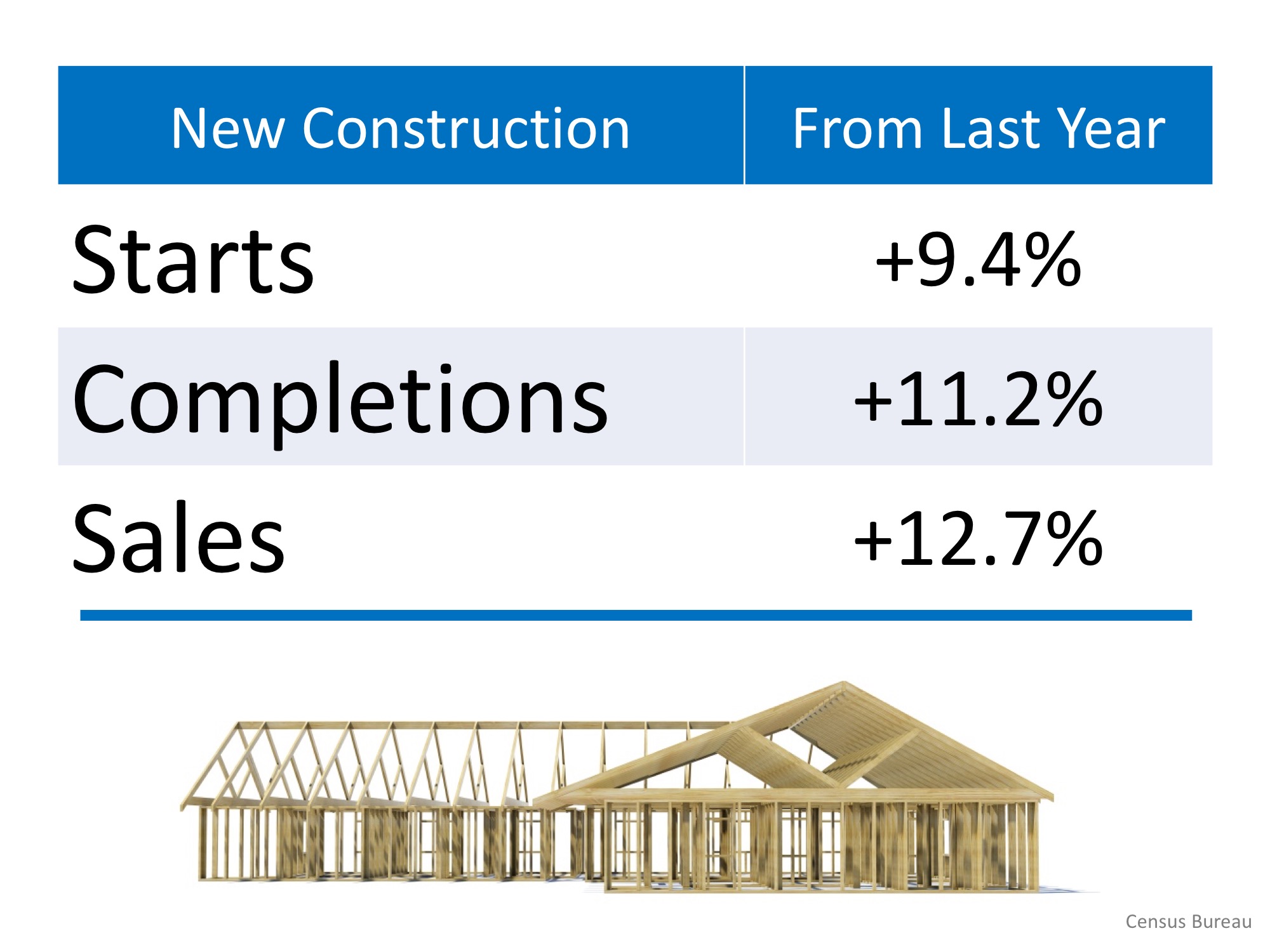
According to the latest New Residential Sales Report from the Census Bureau, new construction sales in August were up 3.5% from July and 12.7% from last year! This marks the second consecutive month with double-digit year-over-year growth (12.8% in July).
The report also showed that builders have ramped up construction with an increase in new construction starts and completions. The summer months are often a busy time for builders as they capitalize on the warmer weather to be able to finish projects.
Below is a table showing the change in starts, completions, and sales from last August.
New Home Sales Up 12.7% From Last Year | MyKCM
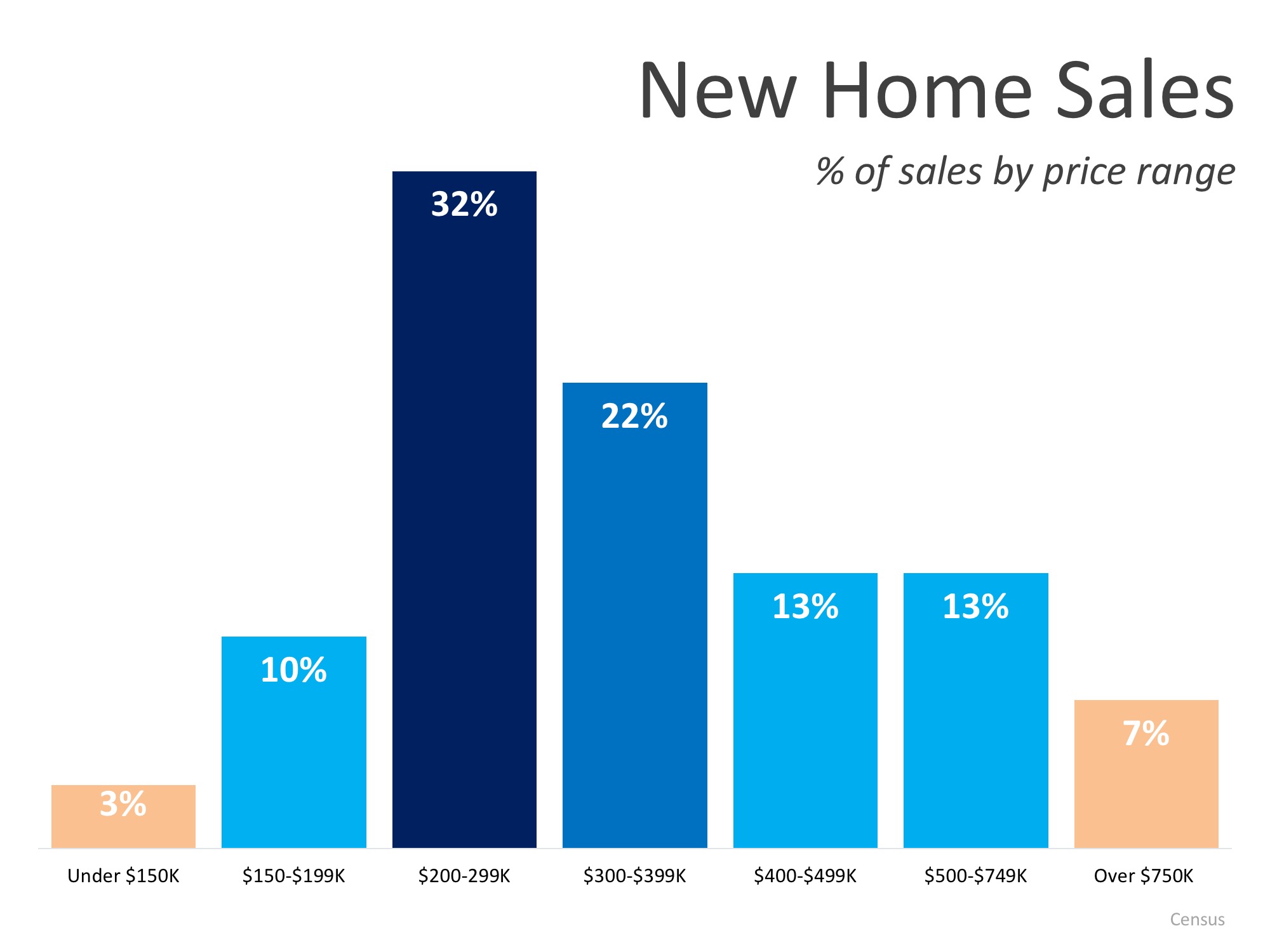
Other notable news from the report is that the percentage of new construction sales in the $200-$299k range has continued to break away from the $300-$399k range.
This shows that builders are starting to build lower-priced homes that will help alleviate some of the inventory challenges in the starter and trade-up home categories. The chart below shows the full breakdown.
New Home Sales Up 12.7% From Last Year | MyKCM

What does this mean for buyers and sellers?

If you are thinking of buying or selling in today’s market, you no doubt have heard that there is a shortage of existing homes for sale which has been driving home prices up across the country. The additional new construction coming to the market could help alleviate this shortage, but we are still not back up to pre-crisis levels.

Buying a Home is Cheaper than Renting in 38 States! [INFOGRAPHIC]


Some Highlights:

  • According to a study by GOBankingRates, it is cheaper to buy a home than rent in 38 states across the country.
  • In six states the difference between buying & renting would account for less than a $50 monthly difference, leaving the choice up to the individual family.
  • Nationwide, it is now 26.3% cheaper to buy.

.Are We About to Enter a Buyers’ Market?


Home sales are below last year’s levels, home values are appreciating at a slower pace, and there are reports showing purchasing demand softening. This has some thinking we may be entering a buyers’ market after sellers have had the upper hand for the past several years. Is this really happening?
The market has definitely softened. However, according to two chief economists in the industry, we are a long way from a market that totally favors the purchaser:

Dr. Svenja Gudell, Zillow Chief Economist:

“These seller challenges don’t indicate we’re suddenly in a buyers’ market – we don’t expect market conditions to shift decidedly in favor of buyers until 2020 or later. But buyers certainly are starting to balk at the rapid rise in prices and home values are starting to grow at a less frenetic pace.”

Danielle Hale, Chief Economist of realtor.com:

“The signs are pointing to a market that’s shifting toward buyers. But, in most places, we’re still a long way from a full reversal.”
In addition, Pulsenomics Inc. recently surveyed over one hundred economists, real estate experts, and investment & market strategists and asked this question:
“When do you expect U.S. housing market conditions to shift decidedly in favor of homebuyers?”
Only 5% said the market has already shifted. Here are the rest of the survey results:

Bottom Line

The market is beginning to normalize but that doesn’t mean we will quickly shift to a market favoring the buyer. We believe Ivy Zelman, author of the well-respected ‘Z’ Report, best explained the current confusion:
“With the rate of home price appreciation starting to decelerate alongside the uptick in inventory…we expect significant debate about whether this is a bullish or bearish sign.
In our view, the short-term narrative will probably be confusing, but more sustainable growth and affordability will likely be the end result."

Mortgage Interest Rates are Still Going Up… Should You Wait to Buy?


Mortgage interest rates, as reported by Freddie Mac, have increased by close to a quarter of a percent over the last several weeks. Freddie Mac, Fannie Mae, the Mortgage Bankers Association, and the National Association of Realtors are all calling for mortgage rates to rise another quarter of a percent by next year.
In addition to the predictions from the four major reporting agencies mentioned above, the Federal Open Market Committee recently voted “unanimously to approve a 1/4 percentage point increase in the primary credit rate to 2.75 percent.” Historically, an increase in the primary credit rate has translated to an overall jump in mortgage interest rates as well.
This has caused some purchasers to lament the fact that they may no longer be able to get a rate below 4%. However, we must realize that current rates are still at historic lows.
Here is a chart showing the average mortgage interest rate over the last several decades:

Bottom Line

Though you may have missed the lowest mortgage rate ever offered, you can still get a better interest rate than your older brother or sister did ten years ago, a lower rate than your parents did twenty years ago, and a better rate than your grandparents did forty years ago.

How Does the Supply of Homes for Sale Impact Buyer Demand?

The price of any item is determined by the supply of that item, as well as the market’s demand for it. The National Association of REALTORS (NAR) surveys “over 50,000 real estate practitioners about their expectations for home sales, prices and market conditions” for their monthly REALTORS Confidence Index.
Their latest edition sheds some light on the relationship between seller traffic(supply) and buyer traffic (demand).

Buyer Demand

The map below was created after asking the question: “How would you rate buyer traffic in your area?”


The darker the blue, the stronger the demand for homes is in that area. The survey showed that in 38 out of 50 states buyer demand was slightly lower than this time last year but remains strong. Only six states had a ‘stable’ demand level.

Seller Supply 

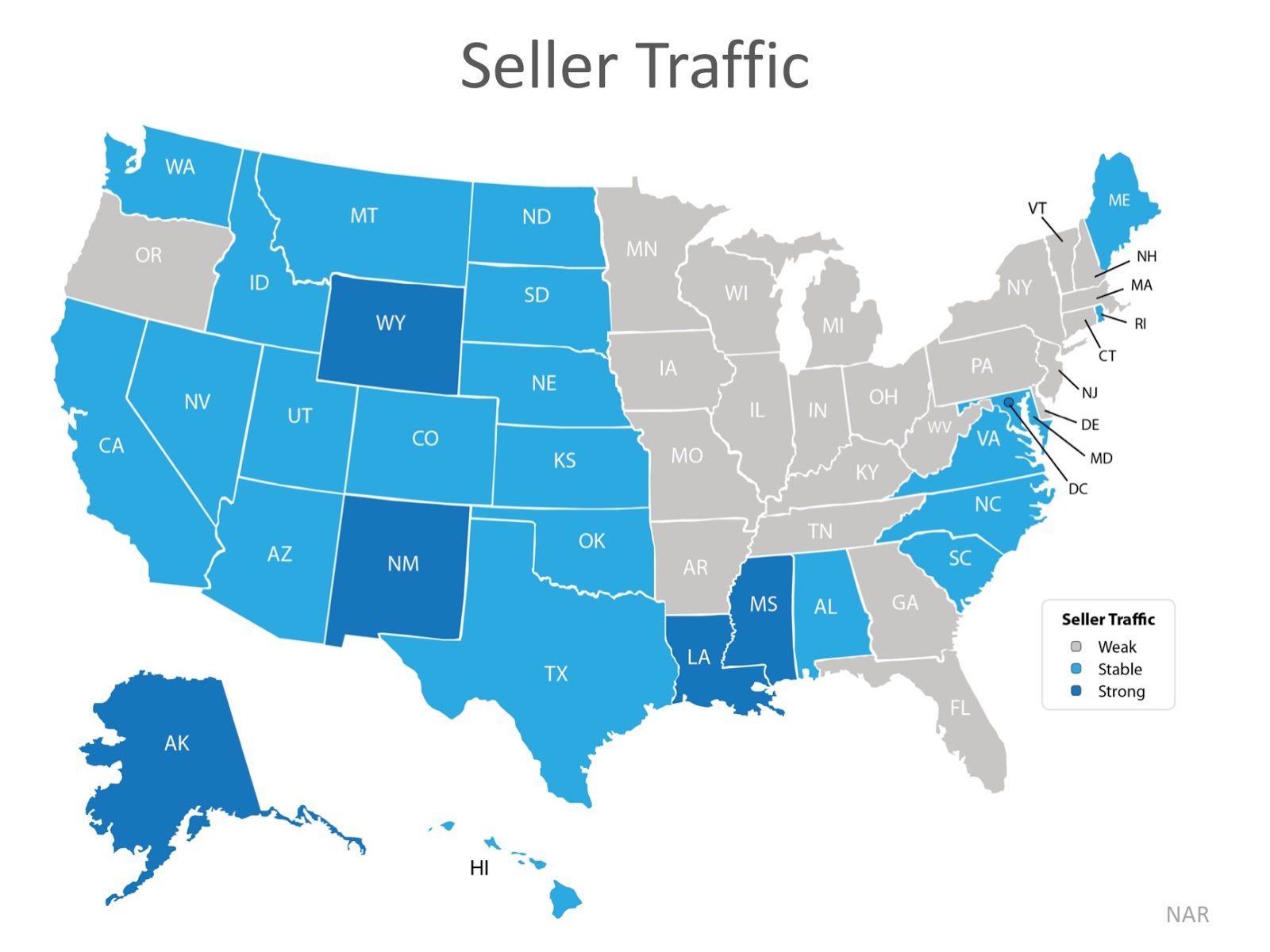
The index also asked: “How would you rate seller traffic in your area?”
As you can see from the map below, 23 states reported ‘weak’ seller traffic, 22 states and Washington D.C. reported ‘stable’ seller traffic, and 5 states reported ‘strong’ seller traffic. This means there are far fewer homes on the market than what is needed to satisfy the buyers who are out looking for homes.

Bottom Line

Looking at the maps above, it is not hard to see why prices are appreciating in many areas of the country. Until the supply of homes for sale starts to meet buyer demand, prices will continue to increase. If you are debating listing your home for sale, let’s get together so I can help you capitalize on the demand in the market now!

Should I Buy Now? Or Wait Until Next Year? [INFOGRAPHIC]


Some Highlights:

  • The cost of waiting to buy is defined as the additional funds it would take to buy a home if prices & interest rates were to increase over a period of time.
  • Freddie Mac predicts interest rates to rise to 5.2% by the third quarter of 2019.
  • CoreLogic predicts home prices to appreciate by 5.1% over the next 12 months.
  • If you are ready and willing to buy your dream home, find out if you are able to!

The Net Worth of a Homeowner is 44x Greater Than A Renter!


Every three years, the Federal Reserve conducts their Survey of Consumer Finances in which they collect data across all economic and social groups. Their latest survey data, covering 2013-2016 was recently released.
The study revealed that the median net worth of a homeowner was $231,400 – a 15% increase since 2013. At the same time, the median net worth of renters decreased by 5% ($5,200 today compared to $5,500 in 2013).
These numbers reveal that the net worth of a homeowner is over 44 times greater than that of a renter.

Owning a home is a great way to build family wealth

As we’ve said before, simply put, homeownership is a form of ‘forced savings.’ Every time you pay your mortgage, you are contributing to your net worth by increasing the equity in your home.
That is why, for the fifth year in a row, Gallup reported that Americans picked real estate as the best long-term investment. This year’s results showed that 34% of Americans chose real estate, followed by stocks at 26% and then gold, savings accounts/CDs, or bonds.

Greater equity in your home gives you options

If you want to find out how you can use the increased equity in your home to move to a home that better fits your current lifestyle, let’s get together to discuss the process.

The information contained, and the opinions expressed, in this article are not 
intended to be construed as investment advice. Keeping Current Matters, Inc. 
does not guarantee or warrant the accuracy or completeness of the information 
or opinions contained herein. Nothing herein should be construed as investment 
advice. You should always conduct your own research and due diligence and 
obtain professional advice before making any investment decision. Keeping 
Current Matters, Inc. will not be liable for any loss or damage caused by your 
reliance on the information or opinions contained herein.


Slaying Myths About Buying A Home [INFOGRAPHIC]

Slaying Myths About Buying A Home [INFOGRAPHIC] | Simplifying The Market

Some Highlights:


  • Interest Rates are still below historic numbers.
  • 88% of property managers raised their rent in the last 12 months!
  • Credit score requirements to be approved for a mortgage continue to fall. The 723 average score is the lowest since Ellie Mae began reporting on scores in August 2011.
  • The average first-time home buyer down payment was 6% in 2015 according to NAR.

Homeownership is Still a Huge Part of the “American Dream”


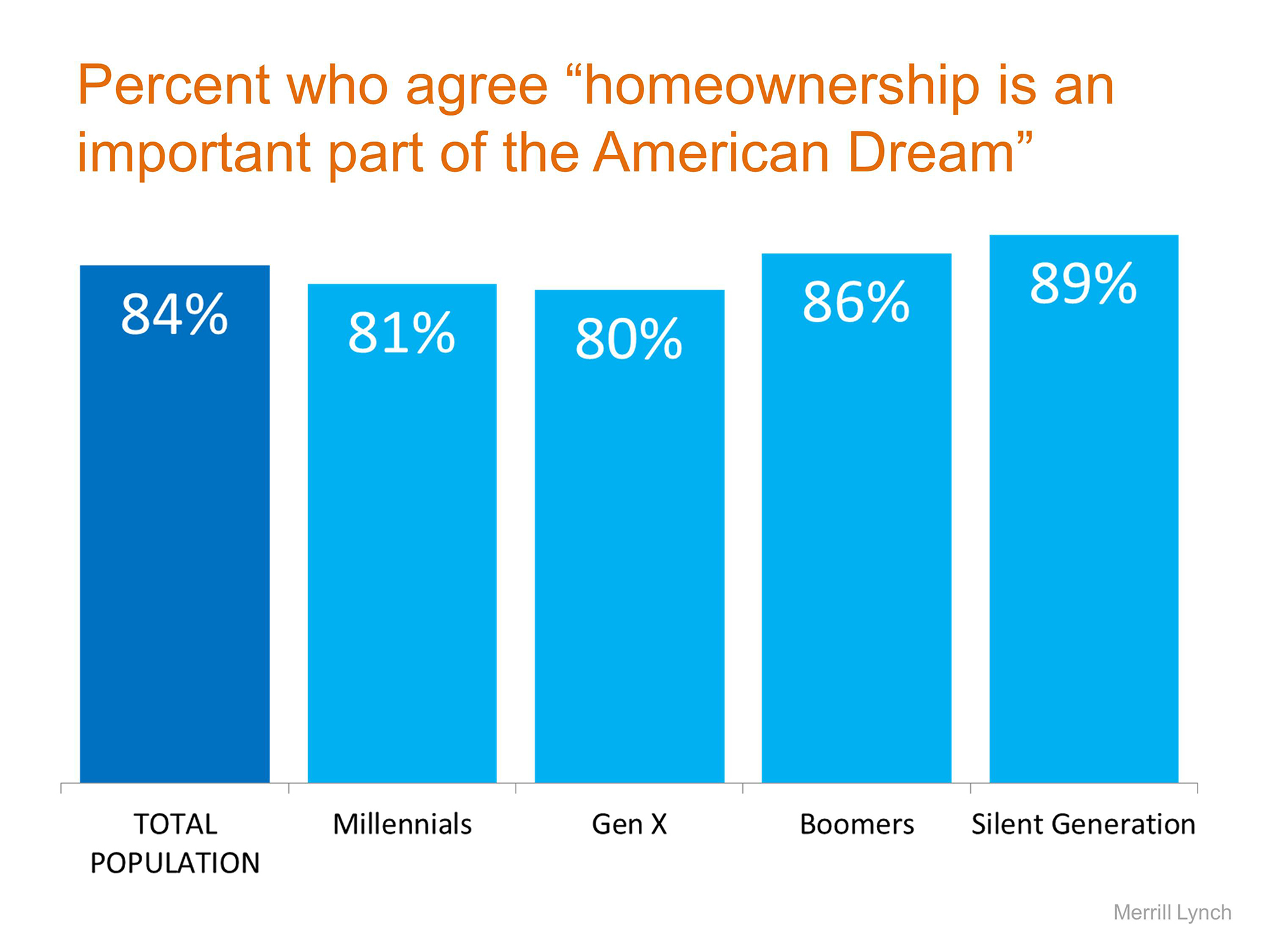
There have been some who have voiced doubt as to whether or not the younger generations still consider buying a home as being part of the “American Dream”. A study by Merrill Lynch puts that doubt to rest.
According to their research, every living generation still maintains that owning a home is in fact important. Here are the numbers:
American Dream STM
This should not surprise us as many studies have revealed the benefits enjoyed by the families who own their own home. One such study was done by the Joint Center of Housing Studies at Harvard University that addressed a major financial benefit to owning your own home: forced savings. The report explains:
“Since many people have trouble saving and have to make a housing payment one way or the other, owning a home can overcome people’s tendency to defer savings to another day.”
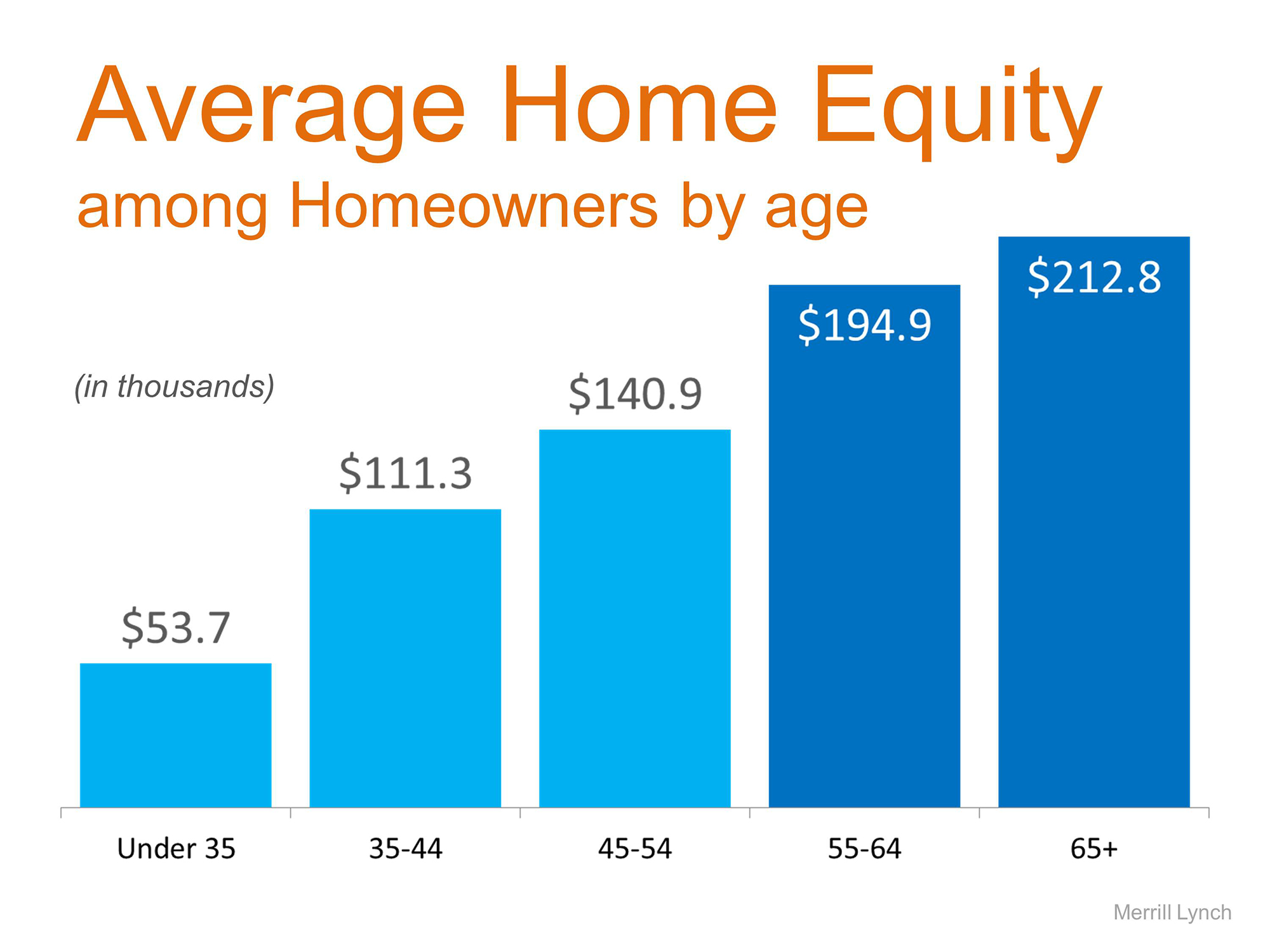
The Merrill Lynch study proves this point with the following data on home equity (a form of savings):
Average Home Equity

Bottom Line

There are many reasons that owning a home makes sense. The financial reasons are powerful. As one participant in the Merrill Lynch study put it:
“When I was younger, I always worried about that monthly mortgage payment. Now that I am retired, I have the peace of mind of knowing I own my home free and clear.”

#1 Reason to List Your House Today


If you are debating listing your house for sale this year or even early next year, here is the #1 reason not to wait!

Buyer Demand Continues to Outpace the Supply of Homes For Sale

According to the National Association of REALTORS’ (NAR) Foot Traffic report, there are more buyers out in the market right now than at any other time in the past three years.
The graph below shows the significant increase in foot traffic experienced this year compared to 2014.
Foot Traffic Year-Over-Year | Simplifying The Market
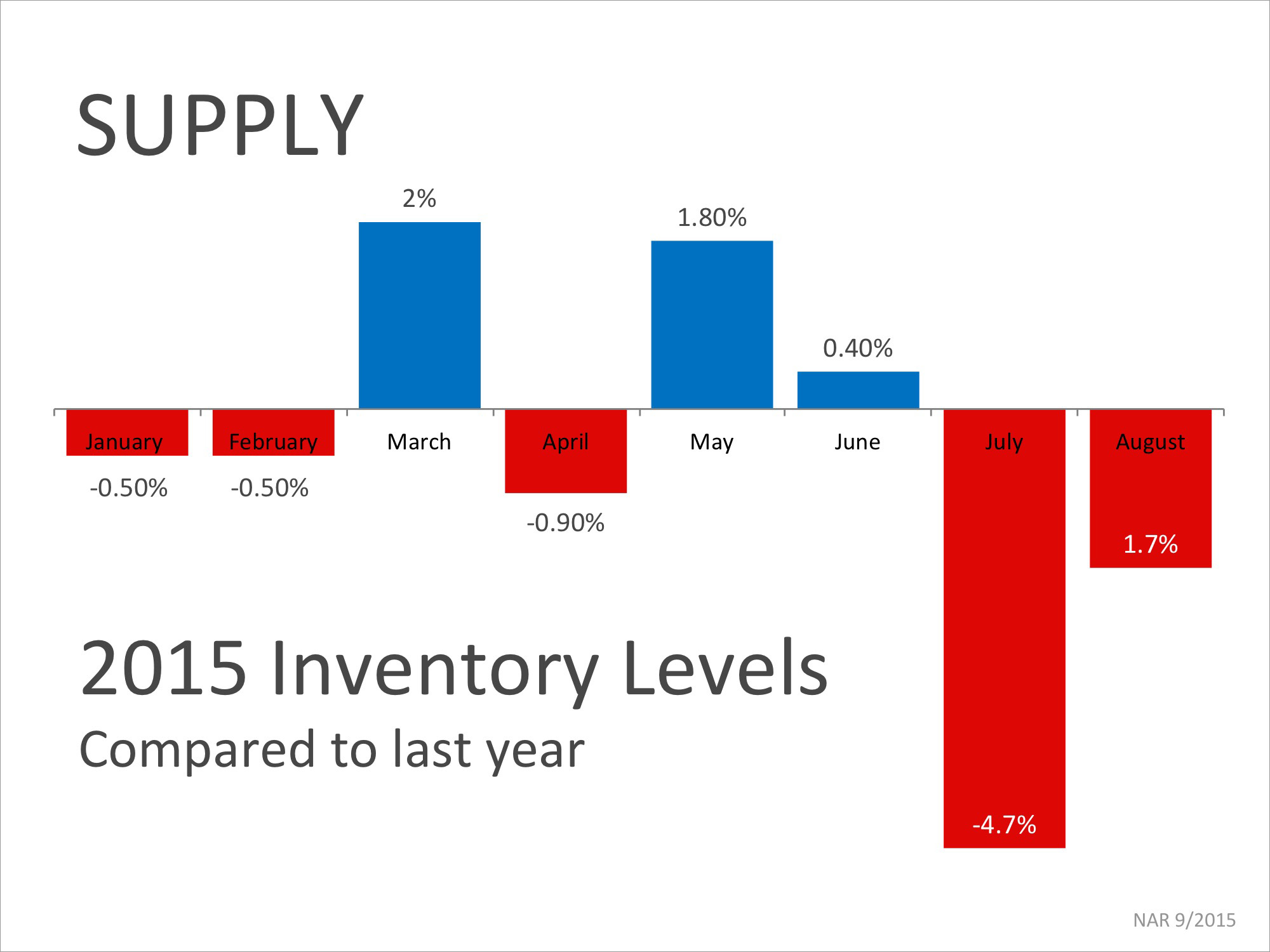
The latest Existing Home Sales report shows that there is currently a 5.2-month supply of homes for sale. This remains lower than the 6-month supply necessary for a normal market and well below August 2014 numbers.
The chart below details the year-over-year inventory shortages experienced so far in 2015:
Inventory Supply | Simplifying The Market

Bottom Line

Let's get together to discuss the inventory levels in your neighborhood and discuss a plan to help you gain access to the buyers who are ready, willing and able to buy today!

How Do Low Gas Prices Affect Your Spending Power?


Selling your Southeast Michigan home? Get a home value report here.
Buying a Southeast Michigan home? Get full MLS access. 

You've probably noticed, and reveled in, the incredibly low gas prices we've had in Birmingham lately. Today, we explain how these great oil prices affect your spending power.

It's been estimated that a 23% decrease in gas prices adds about $100/month to the average American's income. This equates to a 11% boost in purchasing power when buying a new home! Mortgage rates have recently fallen as well, and have resulted in a 7% boost to the purchasing power of buyers in our market! 

As you can see, now is a fantastic time to buy a home. Buying real estate is rarely, if ever, this affordable, so we encourage you to take advantage of these conditions while they last! 

If you have any questions about our current market, we would love to assist you! Give us a call or shoot us a quick email for the service you deserve! We look forward to hearing from you soon! 

How Can You Find Your Dream Home in Southeast Michigan?


Selling your Southeast Michigan home? Get a home value report here.
Buying a Southeast Michigan home? Get full MLS access. 

Today, we want to share a few tips with you about how you can make better decisions when purchasing a home. Let's jump right in:
  1. Purchase a home for the long haul: You need to find a home that will suit your family for the next 5-7 years, so think ahead and set expectations in order to make the best decision. 
  2. Buy what you can afford: You don't want to look at homes that you really can't afford. If you do, you may be tempted to spend more than you should, which could negatively affect you in the long run.
  3. Find the right location: Make sure you are near good schools and convenient shopping outlets, so that you can have a high quality of life for as long as you're living there.
  4. Make sure the home is a good investment: If you have to move for some reason, make sure you can at least get your money back.
  5. Leave room to grow: Make sure the home won't be too large when the kids go off to college, but also that it's not too small for when the kids start to grow and need more space. 
If you have any questions about these tips, or if you would like real estate assistance of any kind, don't hesitate to give us a call or shoot us an email. We would love to give you a hand!